
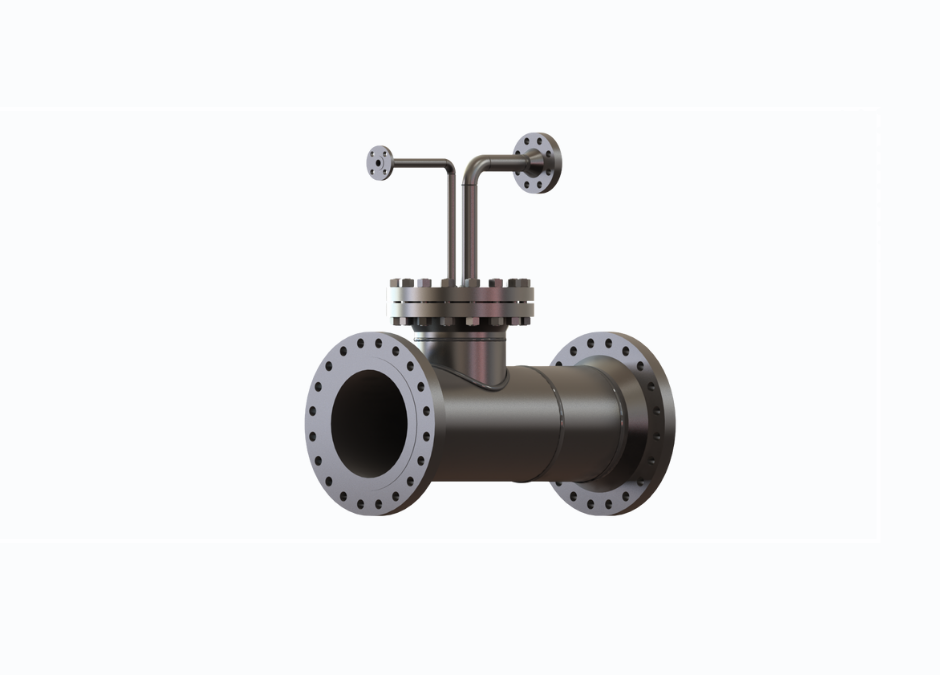
When superheated steam must be brought to a controlled temperature for downstream equipment or heat-transfer processes, the effectiveness of water injection depends on much more than simply adding cooling water to the steam line. The size, distribution, and velocity of the water droplets determine how quickly heat is transferred and whether the injected water fully evaporates. This makes nozzle design a critical part of a boiler desuperheater. Croll Reynolds develops desuperheating solutions with nozzle configurations engineered around steam flow, water pressure, turndown requirements, and mixing conditions to achieve reliable and consistent temperature control.
Why Nozzle Design Matters
The primary purpose of a spray nozzle is to convert incoming cooling water into sufficiently small droplets that can interact effectively with the surrounding steam. Temperature reduction occurs as these droplets absorb heat from the superheated steam and evaporate.
If the droplets are too large, evaporation may be incomplete within the available mixing distance. Larger droplets require more time and energy to absorb heat, potentially resulting in uneven temperature distribution or liquid carryover. Conversely, properly atomized droplets provide a much greater surface area relative to their volume, allowing heat to transfer rapidly between the steam and water. Nozzle design therefore directly influences the effectiveness of the cooling process. The objective is not simply to introduce water into the steam line but to distribute it in a controlled pattern that encourages complete evaporation and uniform mixing.
Understanding Atomization
Atomization is the process of breaking a liquid stream into numerous small droplets. In steam temperature control applications, the quality of atomization depends on factors such as water pressure, steam velocity, nozzle geometry, flow rate, and the pressure difference between the cooling water and steam.
Fine droplets provide greater surface area for heat exchange. When these droplets enter the hot steam environment, heat transfers from the steam to the water. The water subsequently evaporates, reducing the temperature of the steam without requiring mechanical refrigeration or chemical treatment. The difference in velocity between the steam and cooling water can also generate substantial shear and turbulence. These effects help overcome the surface tension of the water and promote further breakup of the liquid into smaller particles.
Venturi-Based Nozzle Operation
A Venturi configuration can use steam energy to assist with water atomization. In this arrangement, a portion of the flowing steam accelerates through a restricted passage, creating a reduced-pressure region. This pressure condition helps draw cooling water into the flow, where the water is exposed to the high-velocity steam.
The cooling water can initially enter the nozzle at relatively low velocity and form a thin film. The high differential velocity between the steam and water generates shear forces that break the film into fine droplets. The resulting turbulent mixture improves contact between the two phases. A converging-stabilizing-diverging nozzle geometry can further support controlled mixing while helping maintain suitable flow characteristics through the device.
Importance of Water Pressure
Cooling-water pressure is an important design parameter because sufficient differential pressure is required to introduce and atomize the water effectively. According to the supplied technical information, the water pressure at the inlet should be at least 2 bar higher than the steam inlet pressure.
This pressure differential helps ensure that the water can enter the steam flow and participate effectively in the atomization process. If the available pressure is inadequate, water distribution and droplet formation may deteriorate, reducing temperature-control performance. The actual pressure requirement for a particular installation should nevertheless be established from the equipment design, operating conditions, required flow range, and nozzle characteristics.
Nozzle Types and Flow Requirements
Different process conditions require different nozzle configurations. Common arrangements include single-nozzle, multi-nozzle, and spindle-type designs. A single nozzle may be suitable for certain flow ranges where the required water distribution can be achieved through one spray point. Multi-nozzle arrangements can provide more controlled distribution when larger steam flows or different geometric requirements are involved.
Spindle-type designs can also be selected where specific flow-control and atomization characteristics are required. The appropriate configuration depends on steam flow rate, cooling-water availability, turndown requirements, operating pressure, and the desired outlet temperature. Nozzle selection should therefore be treated as an engineering exercise rather than a simple component substitution. The geometry must be matched to the process conditions to achieve consistent temperature reduction throughout the operating range.
Turndown and Temperature Control
Industrial steam systems rarely operate continuously at one fixed flow rate. Load changes can alter steam velocity, cooling-water demand, and the amount of heat that must be removed. Consequently, a nozzle must maintain effective atomization across the required turndown range.
Poor performance at low loads can result in inadequate mixing or excessive droplet size, while unsuitable operation at high loads may limit the available cooling capacity. A properly engineered nozzle configuration helps maintain the required spray pattern and heat-transfer performance as operating conditions change.
Achieving Efficient Heat Transfer
The ultimate goal of nozzle design is efficient conversion of superheated steam toward the desired temperature condition. This requires coordinated control of droplet size, spray distribution, steam velocity, water pressure, and mixing turbulence.
Fine atomization increases the available water surface area, while turbulent mixing promotes rapid contact between the phases. When these factors are properly balanced, the cooling water can evaporate efficiently and provide consistent temperature reduction with minimal steam-side pressure loss. The result is a more stable steam condition for downstream heat-transfer equipment and process operations.
Conclusion
Effective nozzle design is fundamental to the performance of a boiler desuperheater, because atomization determines how quickly and uniformly cooling water can absorb heat from superheated steam. Croll Reynolds designs its equipment around factors including steam flow rate, turndown ratio, water pressure, nozzle configuration, and spray distribution. By using appropriate nozzle geometry and maintaining effective water-to-steam mixing, industrial systems can achieve reliable temperature control, efficient evaporation, minimal pressure loss, and reduced risk of side-wall erosion. Proper engineering of the spray system ultimately supports safer, more consistent, and more efficient steam operation.